German Shepherd Tattoo: A Complete Guide to Getting It Right

They don't love you the way other dogs love you. There's no tail-wagging desperation, no constant need for reassurance. A German Shepherd watches, waits, and decides you're worth trusting. And once that decision is made, it never changes.

That quiet loyalty is what most people want to capture. Not a generic dog. Not a police poster. The specific way yours tilts their head when you talk. The weight of their chin on your knee at the end of a long day. The ears that rotate like satellites, tracking every sound in the house.

The German Shepherd is one of the most popular breed in the World and one of the most requested subjects in tattoo shops. But the breed's combination of distinctive markings, dramatic coat variations, and deeply personal working-dog bonds makes it one of the most rewarding portraits to get right.

Quick Snapshot

Overall difficulty: 4.9/10 (medium)

The silhouette is one of the easiest to recognize in the database. The markings are among the hardest to get right.

Pattern precision is the decisive factor.

Why This Page Exists

InkMyPet started because of a German Shepherd named Maya.

My wife brought her home as a puppy when I was going through a deep depression. I didn't ask for a dog. I wasn't ready for one. But Maya didn't care about any of that. She just showed up, this tiny long-coat creature with ears too big for her head, and she decided I was her person.

She saved my life. She put structure back in my days, warmth back in my home, and joy back in a relationship that was carrying too much weight. She grew into this enormous, regal, ridiculously gentle dog who still thinks she fits on my lap.

When I started thinking about the day she won't be here anymore, I did what everyone does. I searched for German Shepherd tattoo ideas. And I realized very quickly that I wasn't looking for a German Shepherd. I was looking for Maya. Her specific face. The way her saddle sits. The feathering around her ears that makes her look like she's wearing a mane. Not a breed. My dog.

Nothing I found online could do that. So I built the tool that could.

That's InkMyPet. It exists because one German Shepherd made everything better, and I wanted a way to carry her with me after she's gone.

From photo to stencil. The blueprint your artist actually needs.

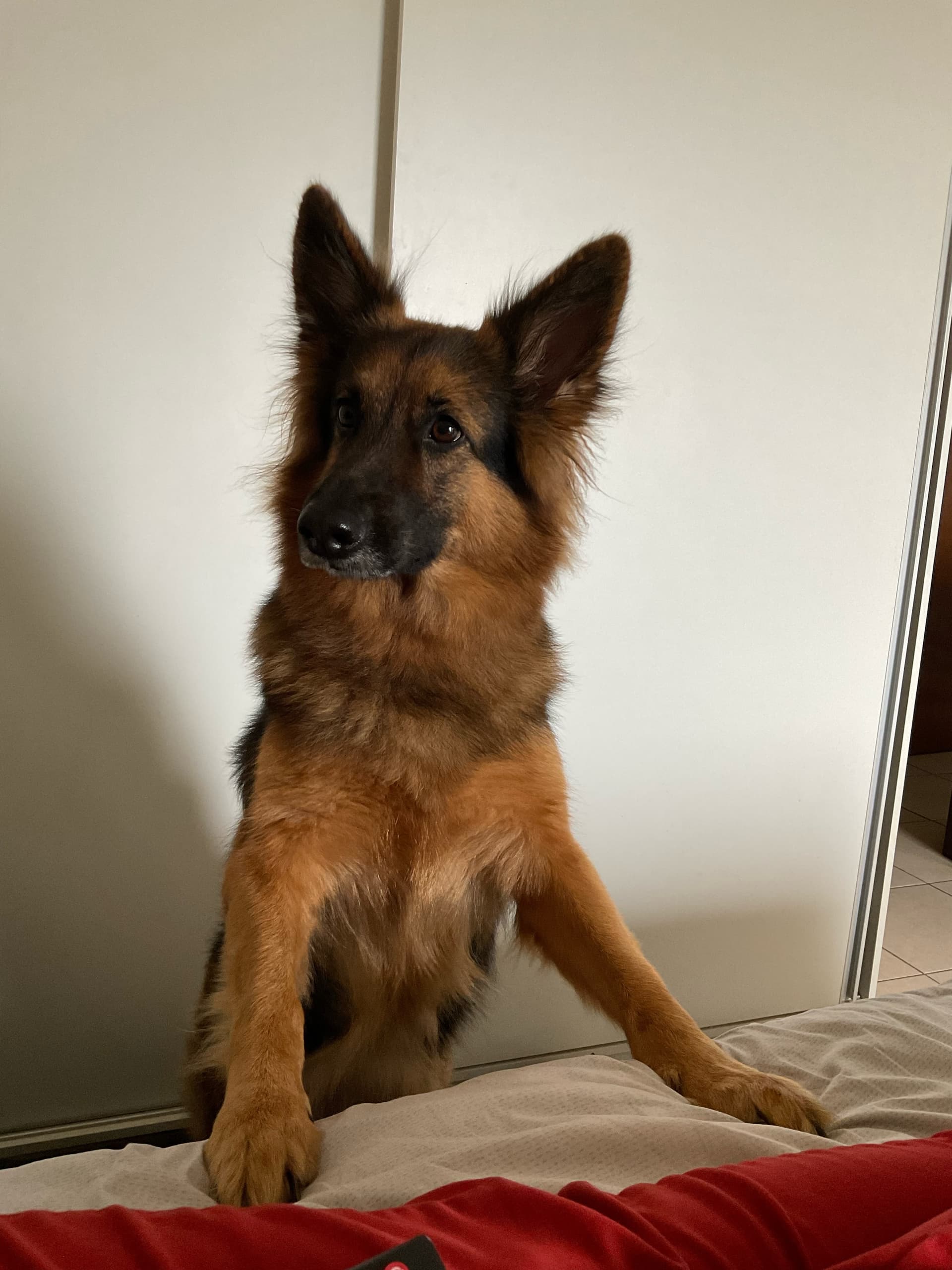
Original Photo
Original German Shepherd photo
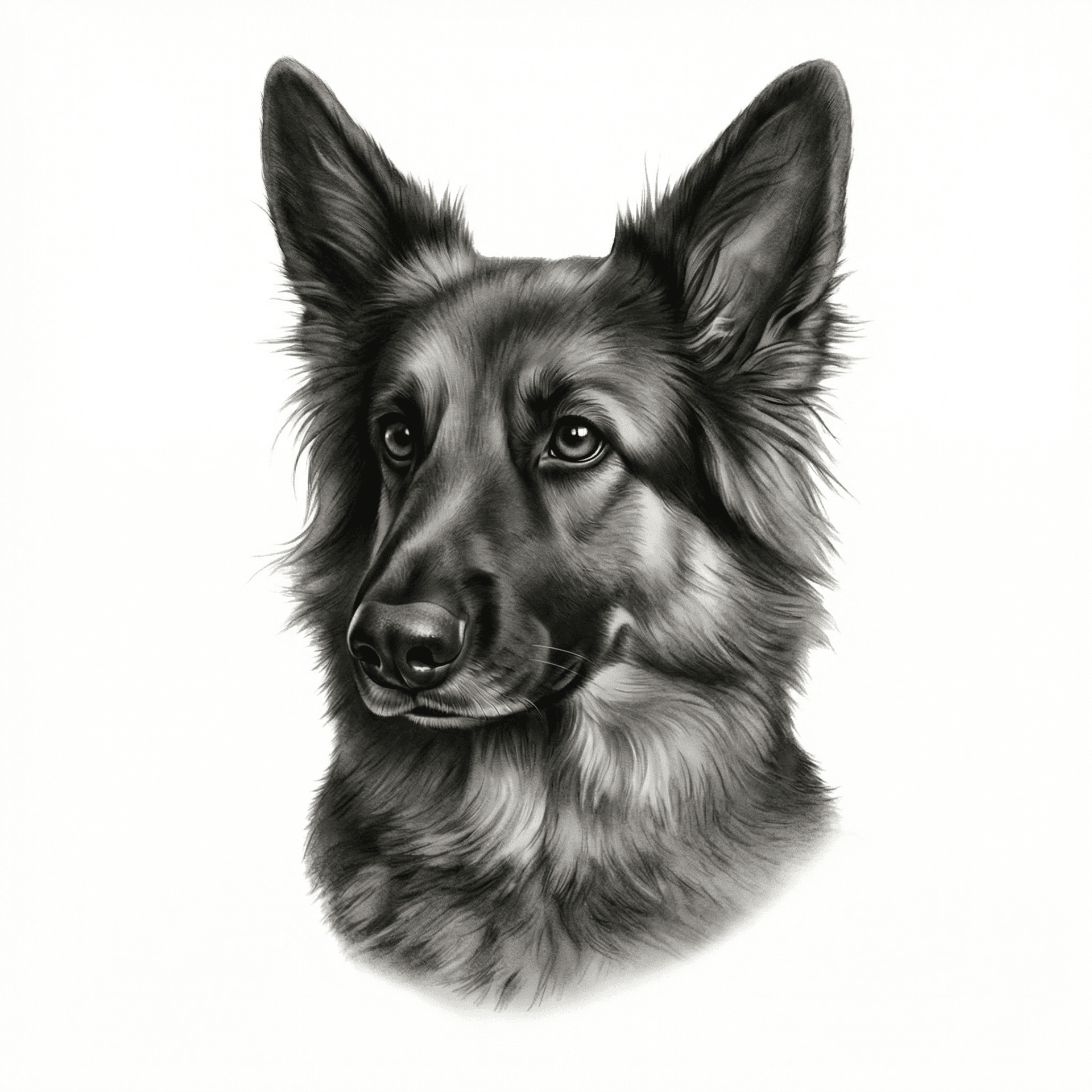
Realistic Stencil
German Shepherd realistic stencil preview

Best Tattoo Styles for German Shepherds

The German Shepherd's combination of strong silhouette and complex markings gives artists a lot to work with. But not every style handles the saddle-back pattern equally well.

Fine Line — Recommended

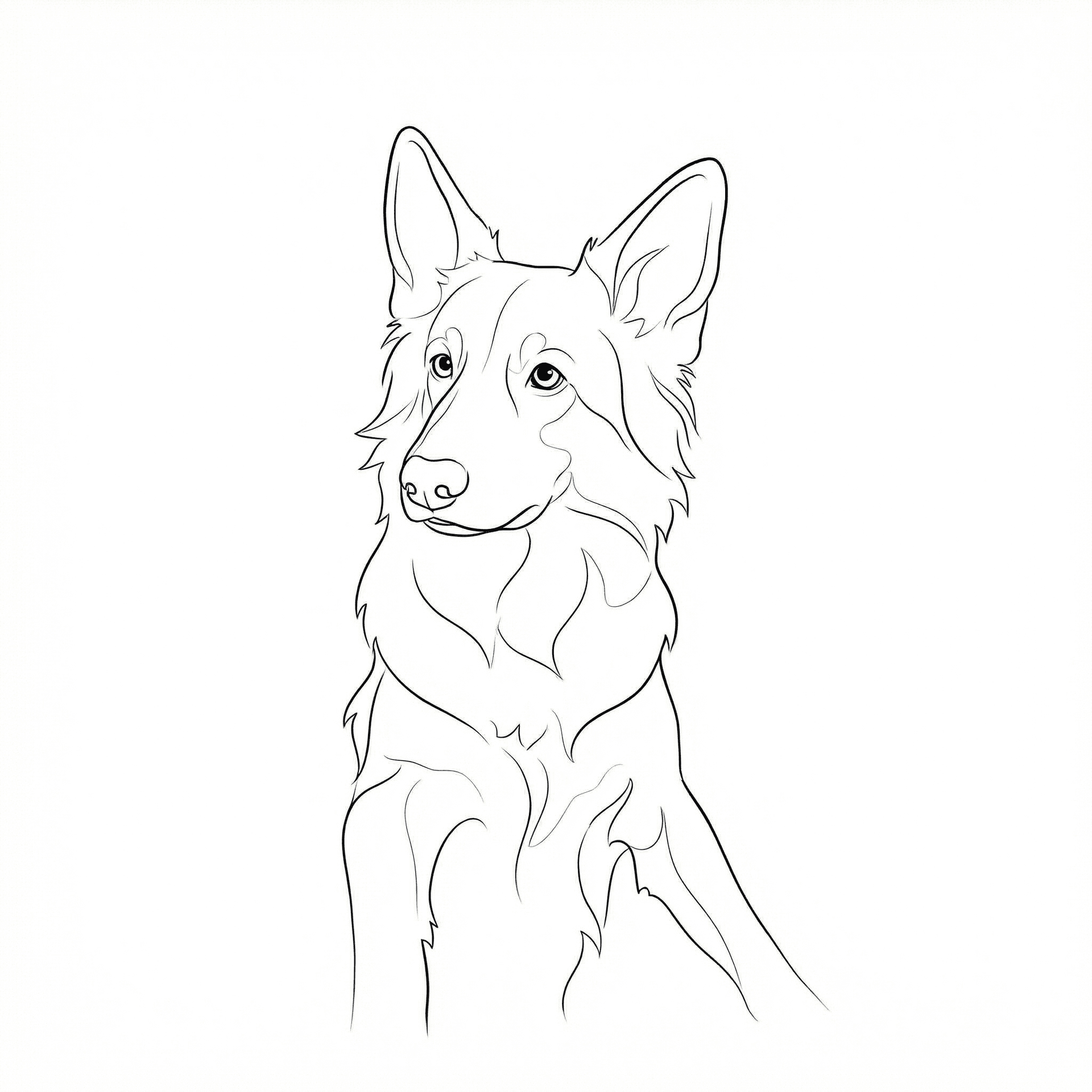
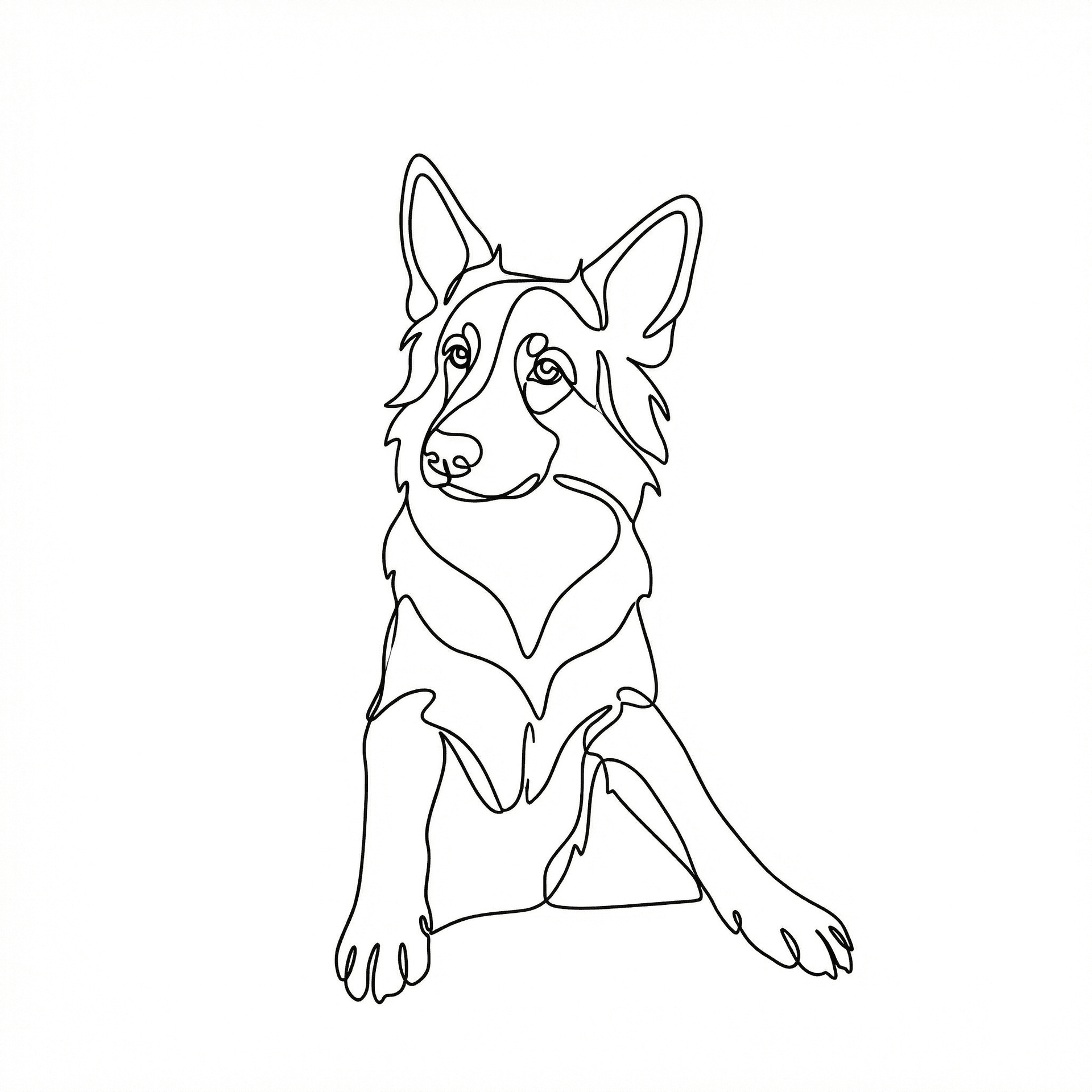
Fine line captures the GSD beautifully. The clean facial structure, the almond-shaped eyes, and the long wedge muzzle all translate well into thin, precise strokes. Where fine line really earns its place is in the saddle-back pattern: the artist can define the tan-to-black boundary with subtle line weight changes rather than relying on heavy shading. Works especially well for face-only portraits where you want to preserve the expression without overwhelming detail.

Best for: portraits, forearm and upper arm pieces, 3-4 inches (7.6-10.2 cm) and up.
Hand-Drawn — Recommended

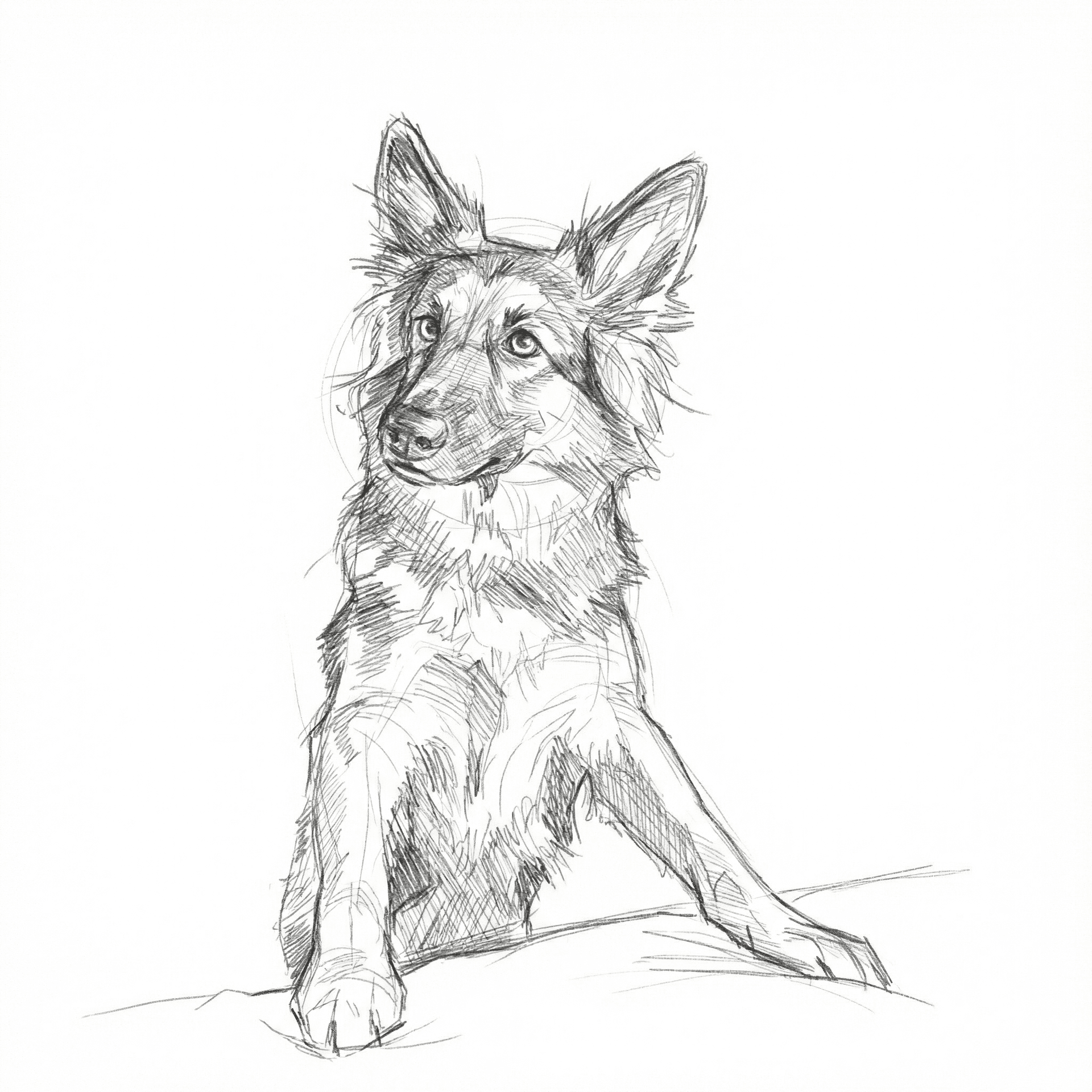
A hand-drawn or sketch style gives the GSD a sense of motion and energy that matches the breed's personality. Slightly imperfect lines mimic the natural roughness of the double coat, and the loose strokes can suggest the saddle-back boundary without requiring surgical precision. This style is forgiving on the color transitions and ages well because the intentional roughness masks the natural softening that happens over time.

Best for: full-body poses, action shots, larger placements (5+ inches / 12.7+ cm).

Geometric — Recommended

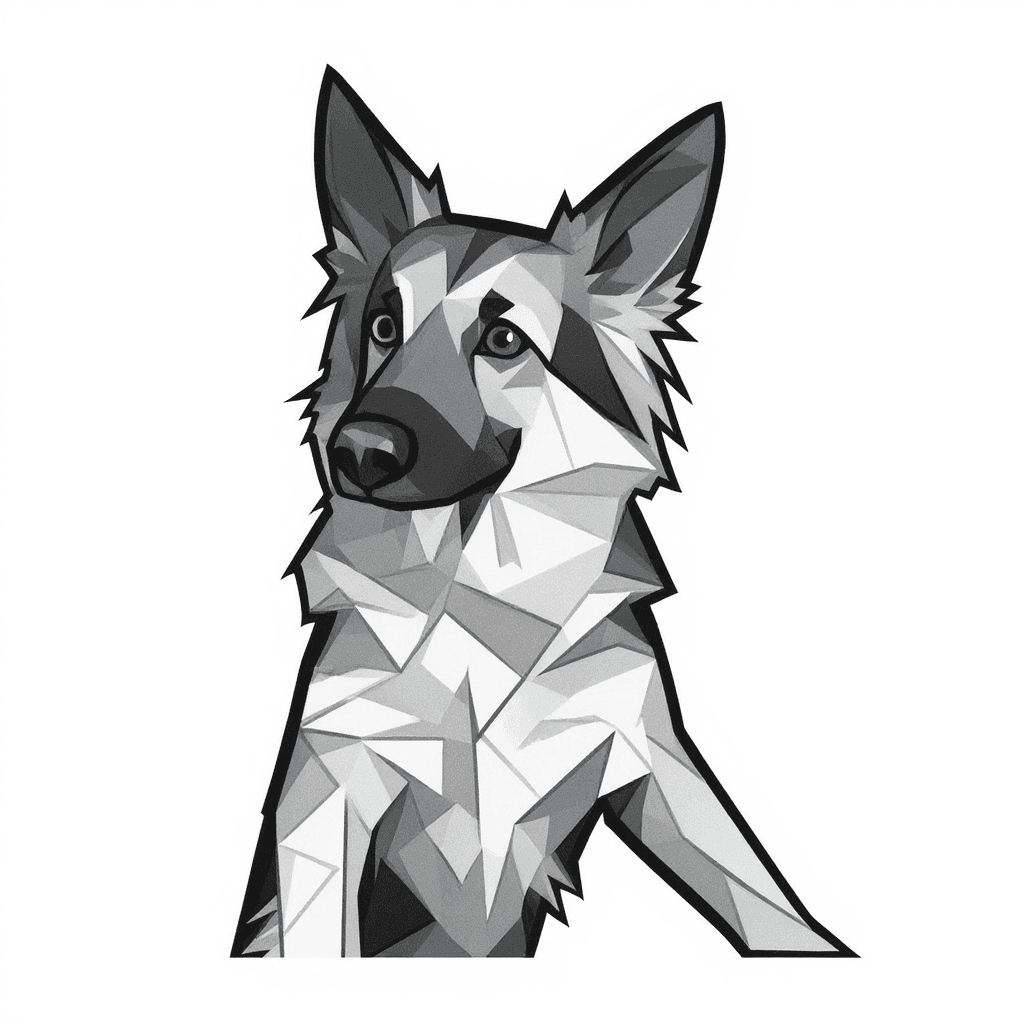
The German Shepherd has one of the most recognizable silhouettes of any dog breed. Erect ears, sloped back, deep chest. That outline works beautifully inside geometric frameworks. A triangle or hexagonal frame with the GSD profile inside creates a striking, modern piece. The markings can be simplified into clean blocks of contrast. Geometric also pairs well with memorial elements like dates or names integrated into the framework.

Best for: modern, graphic pieces, memorial designs, shoulder and calf placements.

Minimalist — Use with Caution

The German Shepherd silhouette is strong enough that a minimalist approach can work. The erect ears and sloped topline are immediately recognizable even in a simplified read. But if the piece drops below about 3 inches (7.6 cm), you lose the ability to suggest the markings at all, and the portrait starts looking like any generic pointed-ear dog. If you go minimalist, keep enough silhouette anchors and stay at 3.5 inches (8.9 cm) or larger.

Best for: small, clean designs only if enough breed-specific silhouette detail is preserved.

Watercolor — Depends on Coat Color

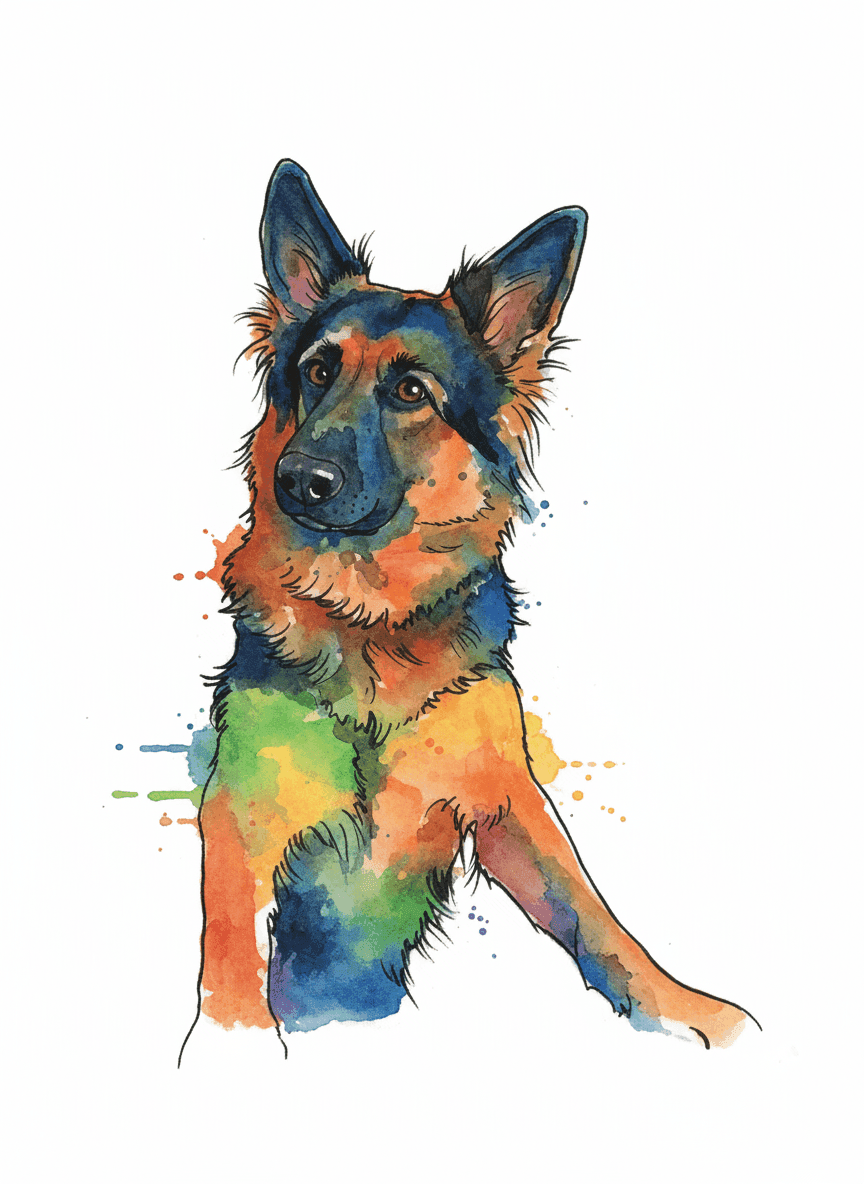
Watercolor works differently depending on your GSD's coloring. For black and red or black and tan dogs, watercolor washes can render warm tones well while black stays defined in ink. For sable dogs, watercolor can match the naturally blended multi-toned coat. For solid black GSDs, watercolor is riskier because the breed's drama comes from contrast that watercolor tends to soften.

Best for: sable coats, black and red/tan dogs in larger pieces (4+ inches / 10.2+ cm).

What your artist needs to know

Tattoo Difficulty Score: 4.9/10 — Medium

Your artist is talented. But talent alone can't capture the exact boundary between the black saddle and the tan underneath. That transition line is different on every single German Shepherd, and it's the detail that makes a tattoo look like YOUR dog instead of A dog. Our AI maps that boundary from your photo, so your artist works from precision, not memory.

Surface Complexity

6/10

Dense double coat with texture that varies between stock coat (harsh, close-lying) and long coat (feathered, flowing). More texture work than a Labrador, less than a Golden Retriever.

Facial Complexity

4/10

Clean, chiseled head with strong lines. The wedge-shaped muzzle and almond eyes are straightforward to capture. The black mask adds definition rather than confusion.

Pattern Complexity

7/10

The highest challenge axis: saddle-back boundary, black mask, and potential sable multi-toning create pattern work no other scored breed matches.

Silhouette Ambiguity

3/10

One of the lowest ambiguity scores. Erect ears, sloped topline, deep chest, and bushy saber tail create an instantly identifiable outline.

Ear Detail

4/10

Large, erect, triangular ears are simple structurally. But they must be proportionally correct: too small and the read shifts to another breed.

Our recommendation

📐 Size: 3.5+ inches (8.9+ cm) for portrait work. 3.5+ inches (8.9+ cm) for minimalist.

🖊️ Style: Fine Line or Hand-Drawn.

⚠️ Watch: Focus your artist's attention on the saddle boundary and the black mask. The silhouette will take care of itself.

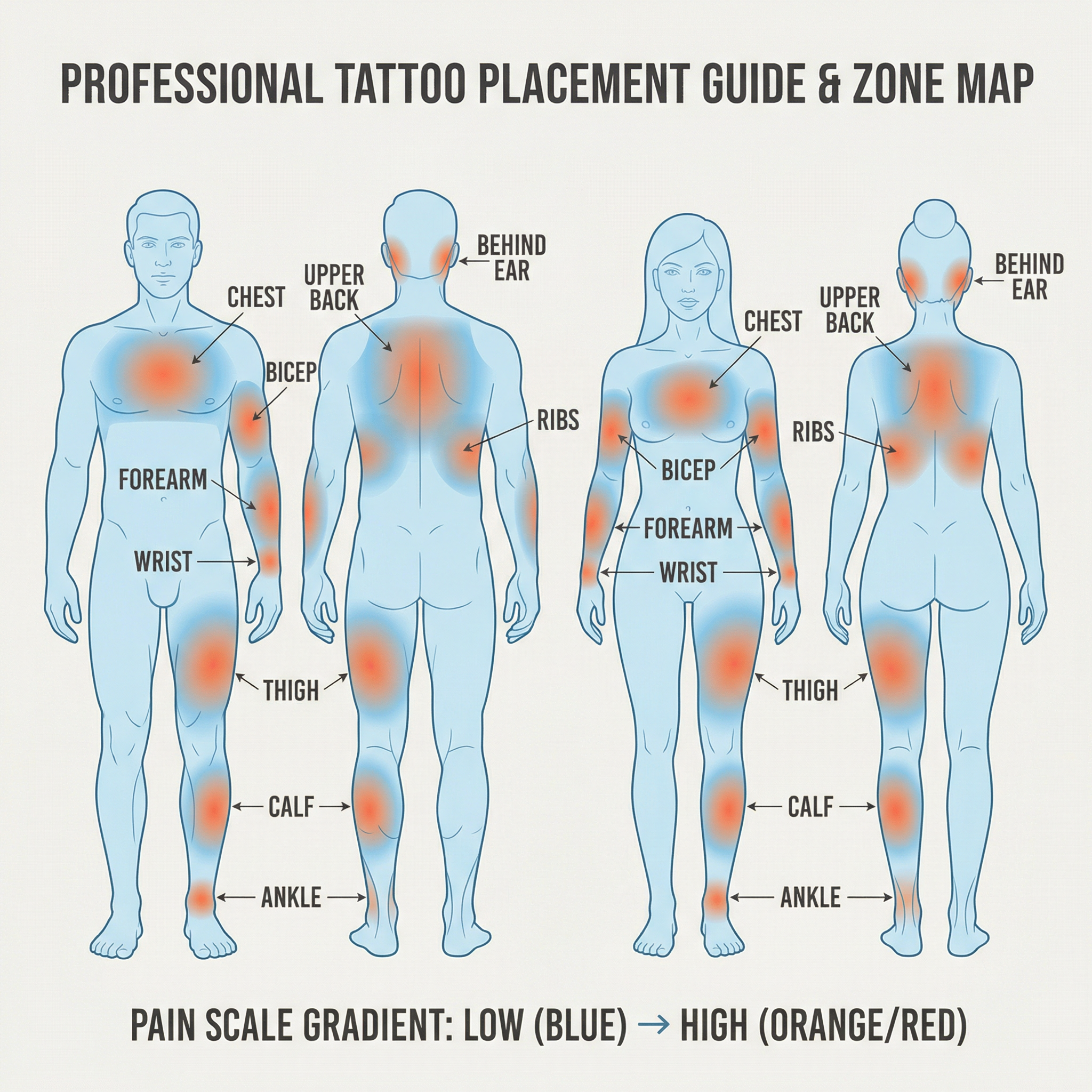
Placement & Size Guide

Minimum recommended size: 3.5 inches (8.9 cm).

The German Shepherd's recognizable silhouette means it can survive at smaller sizes than breeds with ambiguous outlines. But the saddle-back pattern needs room. Below 3.5 inches (8.9 cm), the tan-to-black transition becomes muddy instead of defined.

  • Forearm (inner): most popular for GSD portraits, 3-4 inches (7.6-10.2 cm) usually works best.
  • Upper arm / shoulder: ideal for full-body poses and geometric framing at 5-7 inches (12.7-17.8 cm).
  • Ribcage / side: good for larger memorial pieces; better with experienced artists.
  • Calf: works well for silhouettes and geometric compositions.
  • Wrist / ankle: only for minimalist symbolic silhouettes under 2 inches (5.1 cm).

Placement map

Tattoo placement zone map

Open full size →

3 Mistakes Artists Make on German Shepherd Tattoos

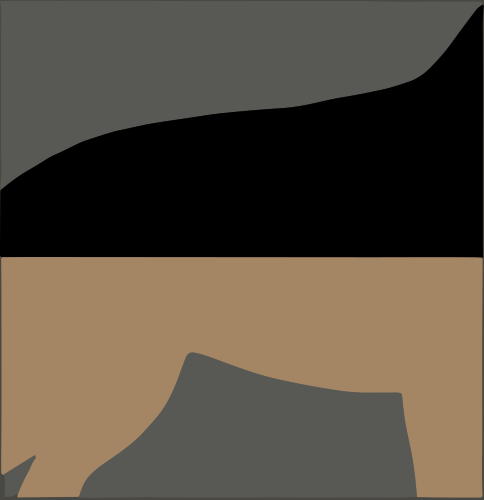
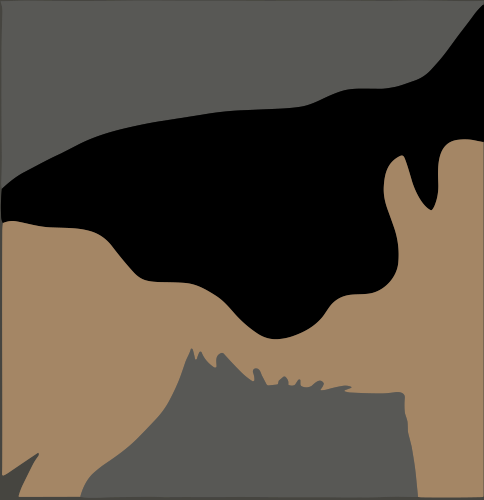
Mistake #1: The saddle-back boundary is wrong

The tan-to-black transition is not a clean horizontal line. It is organic, irregular, and unique to each dog. When artists guess this boundary from memory instead of your photo, the tattoo often reads like a different dog.

German Shepherd mistake: straight saddle-back boundary
Too straight
German Shepherd correct: organic saddle-back boundary
Organic boundary

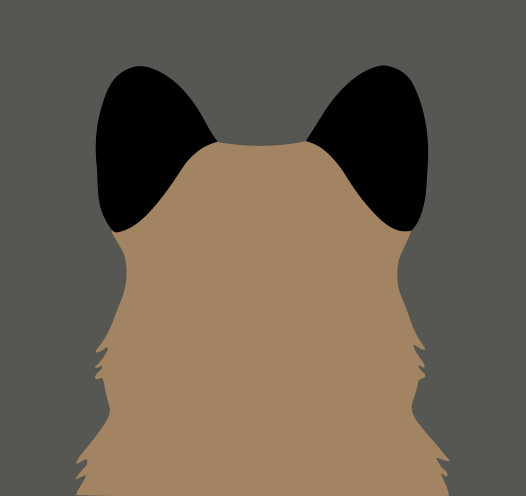
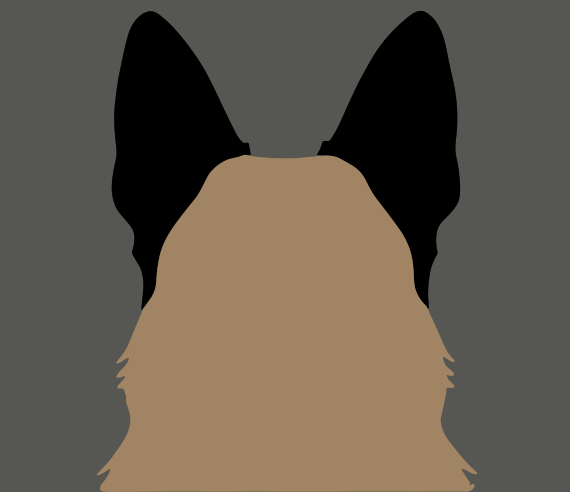
Mistake #2: The ears are too small or too rounded

German Shepherd ears are proportionally large, erect, and moderately pointed. If ears are undersized or rounded, the portrait shifts toward another breed instantly.

German Shepherd mistake: ears too small or rounded
Small / rounded
German Shepherd correct: larger erect ear set
Large / erect

Mistake #3: The black mask disappears or overwhelms the face

If the mask is too light, the face loses sharpness. If it is too dense and uniform, expression collapses into a dark block. The transition around eyes and cheeks carries identity.

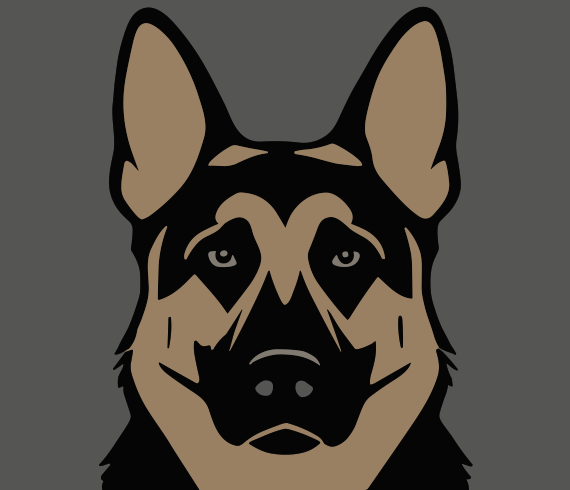
German Shepherd mistake: flat, uniform face mask
Uniform mask
German Shepherd correct: expressive facial contrast
Expressive contrast

Your artist gets a professional kit, not a JPEG.

  • Vector file (SVG): They open it on their tablet, zoom to any size, adjust proportions. Zero quality loss.
  • High-resolution PNG: Print-ready backup for shops that prefer raster workflow.
  • QR download card: They scan it, files open on device instantly.
  • Permit to Tattoo: Certificate with unique ID, style, and lifetime validity.
Get the Stencil Pack
German Shepherd stencil pack preview
SVG VectorPNG HDQR CardPermit

Color & Coat Variations: How They Change Your Tattoo

No other dog in our scored set has this many visual variations that each demand a different tattoo strategy. Your specific coat should guide style choice.

Black & Tan (Classic Saddle-Back)

The most common pattern: black saddle on the back, tan on the legs, chest, and face, with a black mask. Tattoo approach: fine line and hand-drawn both excel. The key is the saddle boundary. In grayscale, tan reads as light value and saddle reads as heavy black. In color, warm tan tones add life.

Black & Red

Same saddle structure but with richer red tones. Tattoo approach: color work usually shows the red identity best. In grayscale, red/tan separation can flatten.

Sable

Sable coats are multi-toned and shift visually with light. Tattoo approach: watercolor or soft black-and-grey transitions can match this blended behavior. The challenge is handling gradients instead of clean boundaries.

Solid Black

Uniform black coat creates dramatic presence. Tattoo approach: blackwork and black-and-grey can be excellent if negative space and highlight control preserve eye and muzzle readability.

Bi-Color

Mostly black coat with subtle tan accents on lower legs and small face details. Tattoo approach: those small accents become identity anchors and need precision.

White

White German Shepherds are strong candidates for negative-space portraiting. Tattoo approach: skin tone can carry the coat while line and value define structure.

Blue, Liver, and Other Rare Variations

These coat tones often translate best in color workflows. In grayscale they can collapse into ambiguous mid-tones unless value planning is deliberate.

Stock Coat vs. Long Coat

Stock coat is dense, straight, and close-lying. Long coat adds feathering around legs, tail, ears, and neck ruff. Long-coat pieces usually need more space and session time to stay readable.

German Shepherd stencil examples

Fine Line German Shepherd tattoo stencil example
Fine LineBest for: Portraits

Best overall likeness with clean structure and controlled pattern lines.

Create in this style →
Watercolor German Shepherd tattoo stencil example
WatercolorBest for: Larger color pieces

Best for sable and black-red identity when the piece has enough size.

Create in this style →
Hand-Drawn German Shepherd tattoo stencil example
Hand-DrawnBest for: Character & warmth

Adds movement and warmth while preserving recognizability.

Create in this style →
Minimalist German Shepherd tattoo stencil example
MinimalistBest for: Small symbolic tattoos
⚠ Tricky for this breed

Works only when silhouette anchors are preserved and size is sufficient.

Create in this style →

Memorial Section

The German Shepherd lives 9 to 13 years on average. For many owners, those years include a level of partnership that goes beyond what most people experience with a pet.

German Shepherds serve. They work alongside police officers, military personnel, search-and-rescue teams, and people who rely on service dogs for independence. They guard homes. They herd livestock. They guide the blind. And when they come home at the end of the day, they lie at your feet with the same quiet presence they brought to everything else.

When that presence is gone, the silence is specific. It's the absence of footsteps behind you in every room. The empty spot by the door where they waited. The sound of a collar that no one is wearing anymore.

A memorial tattoo for a German Shepherd isn't about getting the breed right. It's about getting YOUR dog right. The specific tilt of their ears when they heard you coming. The way the saddle sat on their particular back. The expression they made when they were watching you, not the door.

InkMyPet generates stencils from your actual photo, not from breed templates. Your artist gets the architecture of your dog's face, not a generic German Shepherd. That's the difference between a tribute and a tattoo.

FAQ

How much does a German Shepherd tattoo cost?
The GSD pattern complexity puts it in the mid-to-upper range for dog tattoos. A fine line portrait on the forearm (3-4 inches / 7.6-10.2 cm) typically runs $200-$500 depending on artist and location. Full-body geometric pieces or larger realistic portraits (5+ inches / 12.7+ cm) can reach $500-$900. Minimalist silhouettes often start around $100-$200. The InkMyPet stencil pack includes a vector SVG file your artist can open on a tablet, a QR download card, and a Permit to Tattoo certificate to remove setup friction and guesswork.
What's the best tattoo style for a German Shepherd?
Fine line and hand-drawn are the most consistent choices across coat variants. Geometric also performs very well with the breed's silhouette. The final style should follow your dog's coat color and intended tattoo size.
How is a German Shepherd tattoo different from a Belgian Malinois?
German Shepherd tattoos rely on a more sloped topline, broader chest read, larger ear proportion, and stronger saddle pattern anchors. If those are missing, the result can drift toward Malinois or generic pointed-ear dog.
Should I get my German Shepherd tattooed in color or grayscale?
Color can be powerful for black-red and sable identities. Grayscale works very well for black/tan and solid-black when value contrast is managed well. Choose based on how your dog's identity is carried: color pattern or structure.
My GSD has a long coat. Does that change anything?
Yes. Long-coat feathering increases texture workload and usually needs larger sizing to age cleanly. Expect more line management and more session time than stock-coat pieces at the same dimensions.
Will the tattoo age well?
German Shepherd tattoos age well when contrast and pattern boundaries are planned for long-term readability. The silhouette usually holds strongly; the mask and saddle transitions must be clear enough to survive natural softening.

Create your German Shepherd stencil

Your German Shepherd didn't earn your trust by accident. They earned it every day, in every room, through every moment they chose to stay close. The least you can do is make sure their portrait is as precise as their loyalty.

Upload your photo. Pick your style. Walk into the shop with a blueprint that does them justice.